

A comprehensive guide to every role in the trades — from first day on the job site to running your own contracting business.
The plumbing and HVAC trades offer one of the most clear and achievable paths from entry-level work to business ownership. Below is a typical career lifecycle — timelines vary based on license requirements, local markets, and individual drive.
Most tradespeople start here — no experience needed. Your job is to show up, stay safe, and be a sponge. You'll haul materials, prep job sites, hand tools to licensed techs, and slowly absorb how real systems work. Employers value reliability and attitude above all else at this stage. Many enter through formal apprenticeship programs (typically 4–5 years) registered with the state or a union, earning wages while learning.
You're now doing real work under supervision. Installers learn to set complete systems — running pipe, mounting equipment, commissioning units. Maintenance techs develop the discipline of preventive care. HVAC trainees work toward EPA 608 certification for refrigerants. Plumbing apprentices clock hours toward their Journeyman license exam. This phase is where most of the hands-on trade knowledge is built.
With a Journeyman or equivalent license in hand, you can work independently on a full range of jobs. Many technicians specialize here — chasing higher pay and certification in niches like boiler work, refrigeration, backflow testing, or commercial drain systems. Service technicians in this phase are often the highest-revenue earners in a company because they can diagnose anything and close repair calls on the same visit. This is also where soft skills like customer communication and upselling become as important as technical ability.
Experienced tradespeople who want to move off the tools — or who show strong organizational skills — move into coordination and management. Project managers oversee entire job lifecycles. Estimators turn blueprints into winning bids. Dispatchers are the nerve center of the company, routing techs and managing chaos. Some technicians also transition into sales, leveraging their technical credibility to sell high-ticket system replacements. This phase typically requires a Master license (for those staying in the licensing track) or business-side training.
The endpoint for many ambitious tradespeople is owning their own contracting company. A Contractor's License (requirements vary by state) is typically needed to pull permits and bid commercial work legally. Owner-operators often start as single-truck operations and scale by hiring apprentices and technicians — the very same roles at the top of this chart. Success depends on strong business fundamentals: pricing, marketing, cash flow, insurance, bonding, and employee retention. Many use their technical reputation to win residential service agreements and then expand into commercial installation work over time.
The Full-Circle Moment
Once you're running your own shop, the roles you manage are exactly the ones at the top of this chart — CSRs, dispatchers, apprentices, techs, and project managers. Your career experience in each of those roles is what makes you a better owner.
Plumbers work with water supply, drain-waste-vent (DWV) systems, gas lines, and fixtures in residential and commercial buildings. Licensing follows a clear apprentice → journeyman → master path regulated at the state level.
HVAC technicians install and service heating, ventilation, air conditioning, and refrigeration systems. EPA 608 certification is federally required to handle refrigerants. NATE certification is a widely recognized industry credential.
Larger-scale work in office buildings, hospitals, and industrial facilities. Often requires union membership, additional certifications, and the ability to work from engineered drawings and specifications.
Every successful contracting company needs skilled people off the tools — running dispatch, managing the warehouse, coordinating marketing, and handling customer relationships. Many of these roles can be filled from within, by tradespeople who want to transition.
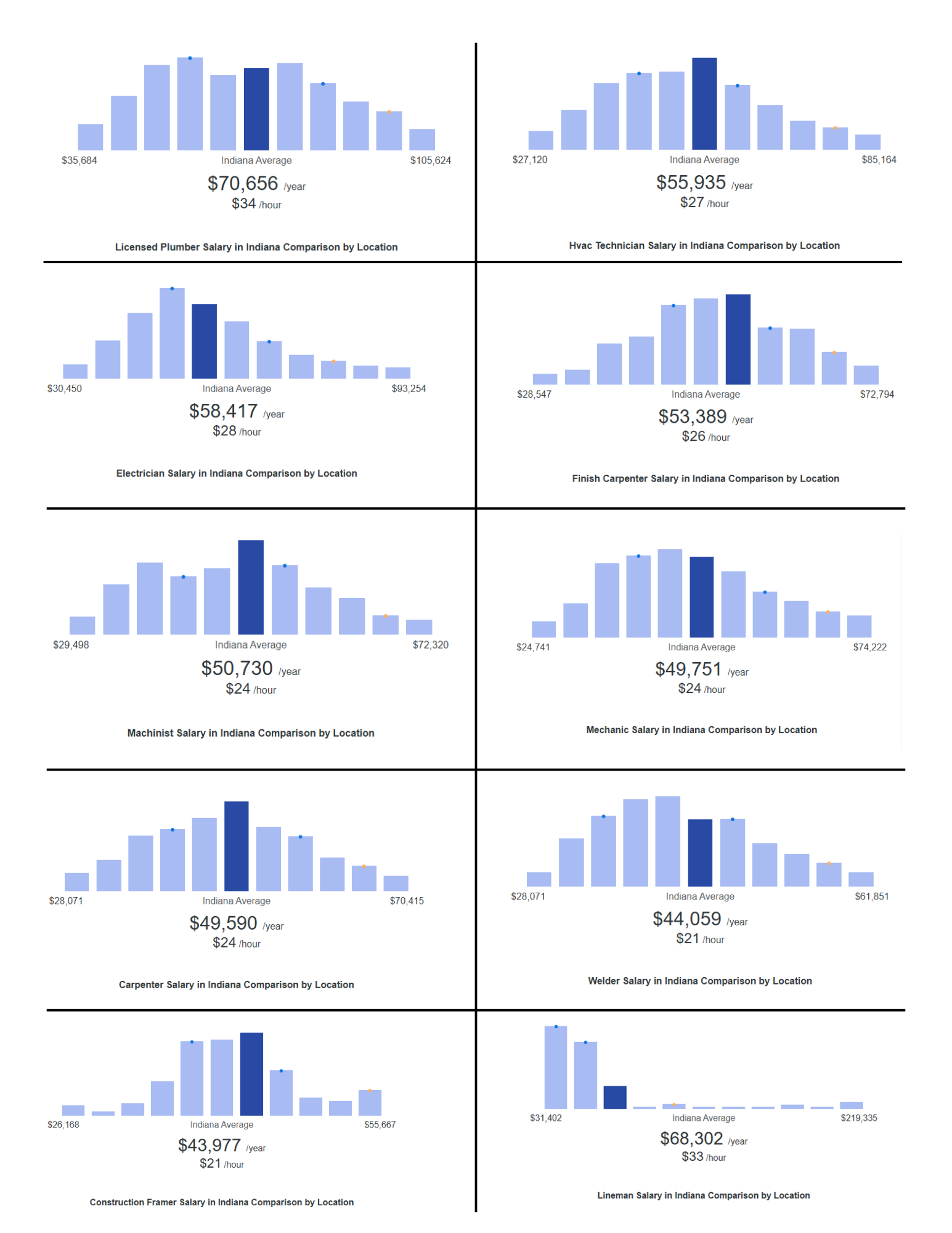
Compensation varies significantly by region, employer, certifications, and experience. Ranges below reflect U.S. national estimates. Urban markets and specialty roles typically exceed these figures.
* Ranges are approximate national estimates. Actual compensation depends on geography, company size, certifications, and performance incentives.
Considering a career in plumbing or HVACR? The Plumbing and HVACR Workforce Readiness Course provides you with an introduction to working in the industry. The course is perfect for deciding which career path you might be most interested in, career changers, industry support staff, new individuals to the trades and those interested in the plumbing-heating-cooling industry. Best of all, it is FREE
Is plumbing a dirty job?
Plumbing is a crucial profession that involves keeping our water systems functioning smoothly. It's about ensuring clean water reaches homes and businesses and managing wastewater effectively. While it can involve getting your hands dirty at times, the work plumbers do is essential for public health and sanitation. Plus, there's a real skill and expertise involved in diagnosing and fixing plumbing issues, which many people greatly appreciate. So, while it might not always be glamorous, it's definitely not a dirty job in the negative sense!
Plumbing can indeed involve working in less than pristine conditions. Plumbers often have to deal with sewage, grease, and other unpleasant substances as they repair and maintain pipes and fixtures. You ask most plumbers, and they will tell you that this part of the job is about 15% of what they do. There are physically demanding and sometimes messy parts of the job - like any in the trades profession. So while it may be dirty at times, it's an essential and respectable profession.
What do plumbers do?
Plumbers are skilled tradespeople who specialize in installing, maintaining, and repairing systems used for water, sewage, drainage, and gas in homes, businesses, and other buildings. Here are some of the tasks plumbers typically perform:
Overall, plumbers play a crucial role in maintaining the infrastructure that delivers clean water and removes waste from our homes and buildings, contributing to public health and safety.
Are plumbers paid well?
Many plumbers will make a great wage - one that can support a family. It is hard work but the effort is rewarded nicely. Further, plumbers who are interested in leadership roles and even owning their own business have a great pathway to doing so. With the training provided to them though their apprenticeship, the plumbing professionals are some of the most knowledgeable professionals on the job sites. This knowledge can lead to project management roles and leadership positions. But working an entire career as a journeyman plumber will provide you with a nice financial lifestyle.
What does an HVAC technician do? HVAC technicians install, maintain, and repair heating, ventilation, and air conditioning systems in various settings, including homes, businesses, and industrial facilities. They work with furnaces, boilers, air conditioners, heat pumps, ventilation systems, and refrigeration units to ensure proper functioning and efficiency.
What qualifications are needed to become an HVAC technician? While requirements vary by location and employer, most HVAC technicians need a high school diploma or equivalent. Many pursue vocational training programs or apprenticeships offered by trade schools, community colleges, or within the company. Obtaining certification from organizations like the Environmental Protection Agency (EPA) and North American Technician Excellence (NATE) can also enhance job prospects.
How long does it take to become an HVAC technician? The time it takes to become an HVAC technician varies depending on the educational path chosen. Some vocational programs can be completed in as little as six months, while apprenticeships typically last three to five years. Certification exams may require additional study time.
What is the job outlook for HVAC technicians? The demand for HVAC technicians is generally strong due to the need for climate control systems in residential and commercial buildings. As buildings become more energy-efficient and require updated HVAC systems, job opportunities for technicians are expected to grow.
What is the salary range for HVAC technicians? HVAC technicians' salaries vary depending on factors such as experience, location, but the pay can provide a nice financial lifestyle.
What are the working conditions like for HVAC technicians? HVAC technicians often work indoors but may also need to work outdoors in various weather conditions. They may encounter cramped spaces, heights, and exposure to potentially hazardous materials. The job can be physically demanding but also rewarding for those who enjoy problem-solving and hands-on work.
Is there room for specialization within the HVAC field? Yes, HVAC technicians can specialize in areas such as commercial HVAC systems, refrigeration, controls and automation, or green technologies. Specialized training and certifications can open up opportunities for advancement and higher-paying positions.
What are the steps to becoming licensed or certified as an HVAC technician? Licensing requirements vary by city and county in Indiana. Most jurisdictions require HVAC technicians to pass an exam demonstrating their knowledge of HVAC systems and safety regulations. Certification from organizations like NATE or the Refrigeration Service Engineers Society (RSES) can also demonstrate expertise and professionalism.
Are there opportunities for career advancement in the HVAC industry? Yes, HVAC technicians can advance to roles such as lead technician, supervisor, project manager, or even start their own HVAC business. Continuing education, gaining additional certifications, and staying updated on industry trends can help technicians advance their careers.
What resources are available for HVAC training and education? Many trade schools, community colleges, and technical institutes offer HVAC training programs. Additionally, apprenticeship programs provide hands-on experience and classroom instruction. Online courses and self-study resources are also available for those seeking to expand their knowledge and skills in the HVAC field.