By Ezra Greenberg, Erik Schaefer, and Brooke Weddle
US manufacturing and construction face a hiring crunch for skilled workers such as carpenters, electricians, welders, and plumbers. A few creative actions can help overcome gaps and boost performance.
The US skilled labor market is facing record-high pressure, particularly for companies with manufacturing and construction operations. Increasing labor scarcity, amplified by the COVID-19 disruptions, has intensified competition for talent, raising the sectors’ average wages by more than 20 percent since the first quarter of 2020.1 Since money wages have rarely, if ever, fallen in the United States, this cost reset is effectively permanent, threatening margins and long-term growth. And this squeeze on labor is set to get worse as demographic headwinds intensify.
To understand the scope of the problem and identify potential countermeasures, we looked at several critical skilled roles, including welders, construction laborers, electricians, and other skill categories that are vulnerable to increased churn (see sidebar, “Our methodology”). For these roles, we found that from 2022 to 2032, annual hiring is expected to be more than 20 times the projected annual increase in net new jobs (Exhibit 1). This extraordinary rate of churn could cost companies more than $5.3 billion every year in talent acquisition and training costs alone.2 The additional lost productivity as new talent is brought up to speed could amount to significantly more.
Read full article here: https://www.mckinsey.com/capabilities/people-and-organizational-performance/our-insights/tradespeople-wanted-the-need-for-critical-trade-skills-in-the-us
The Indy 500 in and of itself is amazing, but to the plumbing industry, it is a monumental challenge for those plumbers tasked with servicing all of the plumbing at the Indianapolis Motor Speedway (IMS). Ticket sales for the 2024 Indy 500 exceeded 335,000 people. Led by the first woman Plumbing Foreman for IMS, Adrianne (Fowler) Morrow, and 10 plumbers this year took on taking care of 3000 toilets, 1900 faucets and 1500 urinals for all of the bathrooms at the track. The weather presented a challenge for us all, but the race began at 4:45 PM (was supposed to start at 12:45pm) and finished at around 8:00 PM.
This is the world famous Indianapolis Motor Speedway's Pagoda around 5:00 AM on race day before the rain set in later and delayed the start of the Greatest Spectacle in Racing.

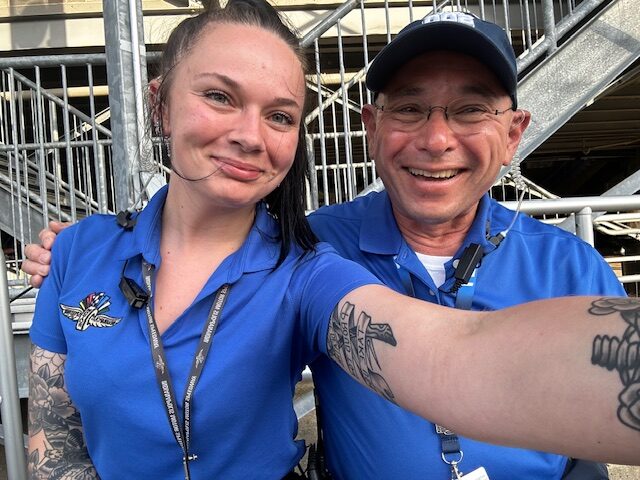
This is a picture of two of the plumbers who worked at the Indianapolis Motor Speedway during the 108th running of the Indy 500. On the left is Indiana PHCC Board Secretary, Valerie Butler who works for PIPE, Inc. She started working part-time for IMS in 2023. On the right is Dave Heffner of Winsupply of Indianapolis. Valerie is a former student of Dave's at Mechanical Skills.
Adrianne (Fowler) Morrow is the first woman Plumbing Foreman for the Indianapolis Motor Speedway. She's an incredibly talented/hard working plumber and a great leader who does an amazing job taking care of her employees and the facilities.
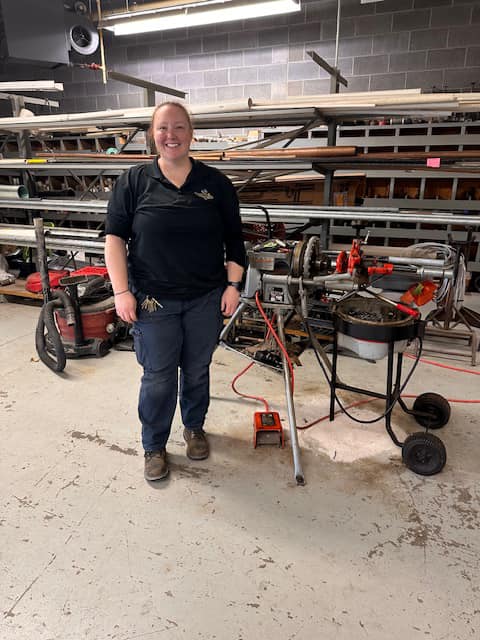
Credit to Dave Heffner of Winsupply of Indianapolis for the pictures and content.
As part of the Administration’s commitment to combating PFAS pollution, EPA announces $1B investment through President Biden’s Investing in America agenda to address PFAS in drinking water
April 10, 2024
Contact Information
EPA Press Office (press@epa.gov)
WASHINGTON - Today, April 10, the Biden-Harris Administration issued the first-ever national, legally enforceable drinking water standard to protect communities from exposure to harmful per-and polyfluoroalkyl substances (PFAS), also known as ‘forever chemicals.’ Exposure to PFAS has been linked to deadly cancers, impacts to the liver and heart, and immune and developmental damage to infants and children. This final rule represents the most significant step to protect public health under EPA’s PFAS Strategic Roadmap. The final rule will reduce PFAS exposure for approximately 100 million people, prevent thousands of deaths, and reduce tens of thousands of serious illnesses. Today’s announcement complements President Biden’s government-wide action plan to combat PFAS pollution.
The rules for deducting depreciation expenses on vehicles used for business purposes have been liberalized under current tax law, but they remain complicated. In addition, annual inflation adjustments make allowable depreciation deductions moving targets. (See "First-Year Depreciation Deductions under the TCJA" below.) Here's how to calculate depreciation deductions for cars, SUVs, pickups, and vans used in your business.
Business owners must choose between the two methods below for claiming allowable business-use vehicle deductions.
For 2024, the standard mileage rate is 67 cents per business mile for 2024 (up from 65.5 cents for 2023). This rate is meant to cover all business vehicles expenses, such as gas, maintenance, repairs, tires, and insurance.
Important: A depreciation allowance is also built into the standard rate
Depreciation calculations come into play only if you choose this method. As the name suggests, the more time-consuming actual expense method tracks all vehicle-related costs based on the amount you actually paid. Depreciation is a non-cash expense, requiring specific calculations under the tax rules.
You can add actual expenses for parking and fees if you use the standard mileage rate. But your deductions will usually be higher under the actual expense method than the cents-per-mile method. If you choose to use the actual expense method, the rules for calculating depreciation write-offs vary depending on the type of vehicle you're using in your business.
Source: TMA Accounting
Determining your business’ value is crucial for planning. However, many business owners are unaware of what that value is. According to a survey of business owners, 98% of businesses polled didn’t know the value of their companies.1
Consider these key points:
Formal valuations can be time consuming, expensive, and may cost as much as $10,000 or more depending on the business. Some common valuation methods include:
It’s essential to choose a method that is tailored to your business. Reach out to your Federated marketing representative for more information about our Value EstimatorSM, which can provide you with an informal value for your advisors for business succession or estate planning discussions.
1 CNBC. Most Small Business Owners Don’t Do The Math On Their Most Valuable Asset. July 17, 2022. Accessed March 21, 2024
This content may be accessed in the following additional options:
| This article is for general information and risk prevention only and should not be considered another other offer of insurance or legal, financial, tax, or other expert advice. The recommendations herein may help reduce, but are not guaranteed to eliminate, any or all losses. The information herein may be subject to, and is not a substitute for, any laws or regulations that may apply. This information is current as of its publication date and is subject to change. Some of the services referenced herein are provided by third parties wholly independent of Federated. Federated provides access to these services with the understanding that neither Federated nor its employees provide legal or other expert advice. All products and services not available in all states. Qualified counsel should be sought with questions specific to your circumstances. All rights reserved. |
Source: https://www.federatedinsurance.com/posts/its-your-life/business-valuation
Forbes Article:
When an entrepreneur brings on a business advisor, they often do so with the intention of gaining sound insight and advice—finding that “second opinion” that can help steer their business in the right direction. But, many times, an advisor turns into something more: a true mentor who can offer guidance, support, motivation and understanding when times get tough, as well as the advice needed to help get you back on your feet.
1. Create A Business Plan
As a bootstrapped entrepreneur in the digital space, I thought this was the most ridiculous advice. The industry is unpredictable and changes at unfathomable speeds. I listened and did it anyway (after being an entrepreneur for eight-plus years already) and the discoveries were mind-blowing. Going through the process of building a business plan and making projections helped me envision what the company could grow to. Once you have this mapped out, you start to picture what it would take to grow it five, 10 or 30 times. This helps you focus on the right things and fast-tracks your progress significantly. I realized that the No. 1 driver of success for our media company was content output, which led to systemization and faster hiring instead of us tinkering with ads or monetization.
2. Hustle And Network In Order To Succeed
You won't succeed unless you hustle. You may be the smartest person in the room, with the best ideas and work ethic, but if you don't hustle, you won't grow. Prior to this, I believed that working hard was enough to thrive. However, my mentor helped me see that I had to find areas that were challenging for me and work on breaking through those limitations. As an introvert, I find it hard to reach out to people and pitch my product or ask for help. I learned through my advisor that hustling, networking and positioning myself in front of others could only lead to growth and success.
3. Picture Your Business Like A Workhorse
Although we like to think of businesses as our "babies," the truth is, our businesses are meant to provide for us (not the other way around). Picturing your business more like a workhorse or mule can shift your mindset and transform how you manage the business. You should not be constantly paying into the business to make ends meet or be left starving after expenses. Lack of proper planning or market research often leads to owners launching without adequate knowledge of the time, effort and funds needed to make the business successful. Your business needs to work for you, but you need to put in the pre-work to ensure you're creating (and protecting) a profitable business for the long term.
4. Listen To What Your Customers Need
One of the best pieces of advice I got early on is to listen to your customers. Making your product stand out in a market that doesn't need it is like swimming against the current: If you do it, your brand will inevitably struggle to grow. Don't try to change your customers' idea of what they need. Instead, listen to them and create offerings that truly solve their problems.
5. Focus On A Niche Market
We are a professional services firm, and before we found our niche, we were offering a wide variety of services, similar to our competitors. The advice I received was to: 1. Print the list of all your clients that you’ve served in the past year. Review the list and mark those clients that you've enjoyed working with. 2. Analyze what is common between these clients and their needs. What makes that commonality different from the market at large? 3. Design a service package that addresses the unique needs of these clients. Eliminate all other services. Focus on a very narrow segment of clients whom you love serving. Adjust your marketing and service delivery standards to meet their demands and charge premium fees for your services. This strategy did miracles for our organization. Read More
6. Talk To Those Who Have Done It
Reach out and talk to people who have already accomplished or done that which you are trying to do! I can't tell you how many entrepreneurs I've seen attempt to solve a challenging problem or navigate a difficult situation either by toiling away in silence, grinding it out night after night or by reading every business book they can, not appreciating that many are nothing more than an extended sales pitch. You'll save yourself an unbelievable amount of time, heartache and money by simply picking up the phone. Don't assume successful people are too busy to take your call. Nothing has had a bigger impact on my business life than following this simple piece of advice.
7. Ask How You Can Help
Instead of focusing on what you need, get into the habit of asking, “How can I help you?” By asking others how you can help them, you will show that you genuinely care about them and would like to add value to their lives. In return, most people will want to look for ways they can help you. You will be amazed by how much you help yourself by asking others how you can help them first.
8. Think Long Term
The best piece of advice I ever received from one of my business advisors was to always be thinking long term. When you're busy running a business, it's easy to get lost in the day-to-day grind and forget the bigger picture. Therefore, it's essential to always pause and take a step back to think about where your business will be in the future if you choose option A or B. This advice has helped me focus my decision-making, leading to many benefits for my business in the long run—not just in the short term. By always thinking long term, my business has continually evolved and grown, making it an essential element of my success.
9. Ditch Perfectionism
“Ditch perfectionism” is the best piece of advice I’ve received, and it has had a great impact not only on my business, but also on my personal life. Perfectionists are slow-paced when it comes to checking tasks off their to-do lists. As a result, things rarely get past the drawing board. Work keeps piling up and you have to deal with higher stress levels. This not only hinders your professional growth, but it also disrupts your work-life balance. The solution? You have to keep the needle moving. This is what that advice taught me, and I haven't stopped since.
10. Invest In Yourself
One of the best pieces of advice I ever received from a business advisor was to always invest in myself. This meant continuing my education and learning new things in order to stay ahead of the competition. Not only did this advice help me professionally, but it also helped me grow as a person. Learn. Share. Grow.
Source: https://www.paychex.com/articles/management/small-business-trends
Small Business Trends in 2024
Staying on top of new business trends means understanding what technologies, practices, and strategies are considerably impacting organizations across industries. Those looking to gain a competitive edge can go a step further and strategize how to embrace and implement small business trends into their business to level up the organization.
1. Preparing for Economic Uncertainties
The Federal Reserve has raised interest rates 11 times since March 2022 to cool inflation and has recently indicated that rates may fall in 2024. However, there is no certainty about where the U.S. economy is headed. Economic uncertainties allow businesses to focus on controlling what they can. For example, high interest rates could mean business financing is more expensive now. Putting a system in place to manage cash flow can better prepare you for business ups and downs.
And don't forget how economic challenges may impact your employees. The cost of living in the U.S. has skyrocketed, affecting both employees' salaries and employers' budgets as they try to remain competitive and keep great workers. Take time to weigh factors such as competition in the labor market, budgets, and business projections to determine whether pay increases make sense this year.
2. A Demand for Seamless Customer Experiences
Although digital experiences have become common, consumers' shopping habits are shifting again. Whether driven by increased awareness to reduce monetary and carbon costs associated with shipping, lending support for their local economy, or simply wanting the experience of shopping in-person again, consumers are embracing a hybrid or omnichannel approach to shopping, with the expectation that there will be a seamless experience as they go from online to in-person with the same brand. They will interchange visits to brick-and-mortar stores, use mobile apps, and shop online to make choices that support their needs and beliefs.
To ensure success, small business owners should have a mobile-friendly, easy-to-navigate website with e-commerce options that allow consumers to quickly find what they want and purchase products or services from their mobile devices. The same attention to detail should be applied to traditional shopping methods. Look for ways to continue the convenience of blending the two, such as curbside pickups, and make sure your in-store service leaves customers with a positive experience.
3. Strategic Use and Regulation of AI
Artificial intelligence continues to grab headlines as its influence on businesses grows. The 2023 Paychex Pulse of HR Survey found that over 75% of HR leaders in companies with 20 or more employees said they will use AI in the next 12 months to help managers and HR leaders find more time for strategic work.
What are some popular ways small businesses can leverage AI?
For all its upsides, AI also has limitations, including the potential to introduce bias, threaten copyright protections, and weaken protections around an individual's privacy. Federal, state, and local governments have begun taking regulatory action to ensure AI technology continues to be developed ethically and used responsibly. Business owners must be aware of all the regulatory requirements in the various jurisdictions where they conduct business, including audits and disclosure requirements at the state and local levels.
4. Increased Focus on Sustainability
Growing concerns around how habits, purchasing decisions, and lifestyles impact the environment have cemented the issue of sustainability firmly in many customers' decisions — from which companies they do business with to the types of goods and services they choose to buy.
To effectively embrace this trend and respond meaningfully, employers must consider the environmental impact of their business model. Look for opportunities to reduce the energy consumption and greenhouse gas output of your supply chain, assess your internal practices to reduce waste, consider remote or hybrid workplaces for employees, and evaluate your own business's long-term environmental impacts in the form of packaging and product lines. Ultimately, these measures can help your business gain a hiring advantage and increase its resiliency through being more efficient and responsive to environmental pressures.
5. Alternative Payment Options
As payment processing evolves and more options become available for safer non-cash transactions, consumers are using mobile, card, and alternative payments more often. The onset of new technology, combined with the rising demand for contactless payments, has further hastened the shift away from cash transactions. Small business owners should continue to expect increased demand for alternate payment options in the form of apps, mobile wallets, and wearable devices. If they haven't already done so, small businesses should research contactless payment options. Fortunately, this trend reaps benefits such as a business's ability to leverage the systems to increase sales, improve cash flow, and reduce the risk of accepting fraudulent currency.
6. Continued Focus on Employee Development
New performance management techniques are transforming the way businesses prioritize their retention efforts. For instance, investing in learning management can help employees further develop key skill areas and better immerse themselves in the company culture. Upskilling (training that builds upon an employee's current skills), reskilling (training an employee for an entirely different job), and employee training programs can provide your workers with what they're looking for professionally, helping you invest in the future of the small business.
7. Updated Wage and Hour Laws Expected
While certainly not new, a focus on HR compliance should always be top of mind for businesses of all sizes. Specifically, the U.S. Department of Labor expects to release its new overtime rule in April 2024. The current Final Rule on overtime exemptions has been in effect since Jan. 1, 2020, and, at its implementation, made 1.3 million American workers newly eligible for overtime. Employers should prepare for the potential impacts on their business, including which employees will be impacted, how it will affect budgets, procedures related to payroll, and even morale if wage compression comes into play. For employers who must also consider state, local, and even industry-specific wage and hour laws and regulations, these compliance matters could present a complex business challenge in 2024.
Overall, there should be a clear strategy for bridging the gap between the company's development, objectives, and compliance practices that influence hiring, employee development, and retention. If you haven't done so in the past, this year may be a perfect time to develop an HR compliance checklist that can serve as a compass for compliance-related areas.
Which Industries Are Projected To Boom in 2024?
Certain fields are expected to see continued innovation, growth, and investment in the next decade, stemming from shifting consumer preferences, an increasingly online world, and the effects of an aging population. Some of the industries that are projected to boom in the upcoming years, as forecasted by the U.S. Bureau of Labor Statistics, include:
What Are the Biggest Business Concerns in 2024?
Business ownership is never without challenges, but how employers respond could determine how well they navigate uncertainties in 2024. Some challenges small businesses could face this year are:
Use Emerging Trends in Business To Drive Your Success
Businesses today must contend with era-defining changes, a significantly reshaped workplace, and navigating professional challenges, all of which require a keen understanding of future business trends in 2024. As you think strategically about key business decisions, consider outsourcing other duties that require valuable time and resources, such as HR administration, payroll, and assistance with regulatory compliance.
Dan is the 2024 Indiana PHCC Leadership Summit Workshop Leader
What do you see as the 2 biggest obstacles P-H-C Contractors are facing over the next 5 years?
Dan: I think we’re going to see a bit of an evolution as Private Equity continues to take a prominent place in the market. I don’t believe the independent contractor is going away. But the way they each show up in the market will shift. There will be an increased migration of leadership to and from those PE groups. The deck will continue to be shuffled. The obstacle is the opportunity – be ready to recruit leaders. That’s number one. Number two, I’d say the next five years will be pretty good for business, but all indicators seem to say that the 2030’s will bring a decline. I’d be hoarding cash and resources for the next five years. Build your leadership team, and put away some resources.
You have been working with contractors across North America. You have seen best practices. I know this is not a fair question to ask, because you cannot solely concentrate on one thing, but if you were to select just one best practice for a contractor to focus on, what would that be?
Dan: No hesitation – People development. Invest in career path development. Technical skills. Interpersonal skills. Leadership development. This industry is high-touch; people interacting closely with people at every level. Internally, within the structure of the company. Externally, with clients and vendors. The quickest path to sustainable growth is the human beings. Get thoughtful, intentional, and persistent with your investment into your people.
Leadership continues to be a topic of conversation throughout Indiana PHCC members. What are specific traits in employees that should be observed when making some critical decisions about who can help lead a business?
Dan: There are three behaviors I seek out that I consider at the top of the list. These are Guiding Principles for me. They get measured weekly, talked about daily, and acknowledged whenever we see them exhibited.
We know that recruiting new plumbers and HVAC technicians has been a difficult task. How can we, as an industry, get more individuals interested in joining the industry?
Dan: Get involved in High Schools. Find and support your local college ‘entry to trades’ programs. Host career days at your shop. Get organized around making the trades a first-choice career path. Visit Explore The Trades for help with this. I like to hire summer help. There are often grants available for this kind of thing. The future of our business belongs to those companies who provide the best career path to the young people.
‘Keep Your Employees Safe. Protect Your Reputation.’
PHCC member Greg Brenneman is realizing some game-changing results at Brenneco Plumbing in Lafayette, Indiana, thanks – in large part – to strategic actions in terms of safety and risk management. Most recently (and with some encouragement from fellow PHCC member Dave Frame), Brenneco recently started using PHCC Corporate Partner Federated Insurance’s DriveSAFE telematics solution, which leverages technology to give Brenneman and his employees consistent, meaningful feedback on their driving behaviors. “It has been well received by employees,” he says. Read more here about how this technology is helping Brenneman work smarter, not harder.